Understanding Bond Funds in Rising-Rate Years
Bonds are supposed to be the safe part of your portfolio — so why is the bond fund flashing red? The mechanics of rates, duration, and why the pain is usually temporary.
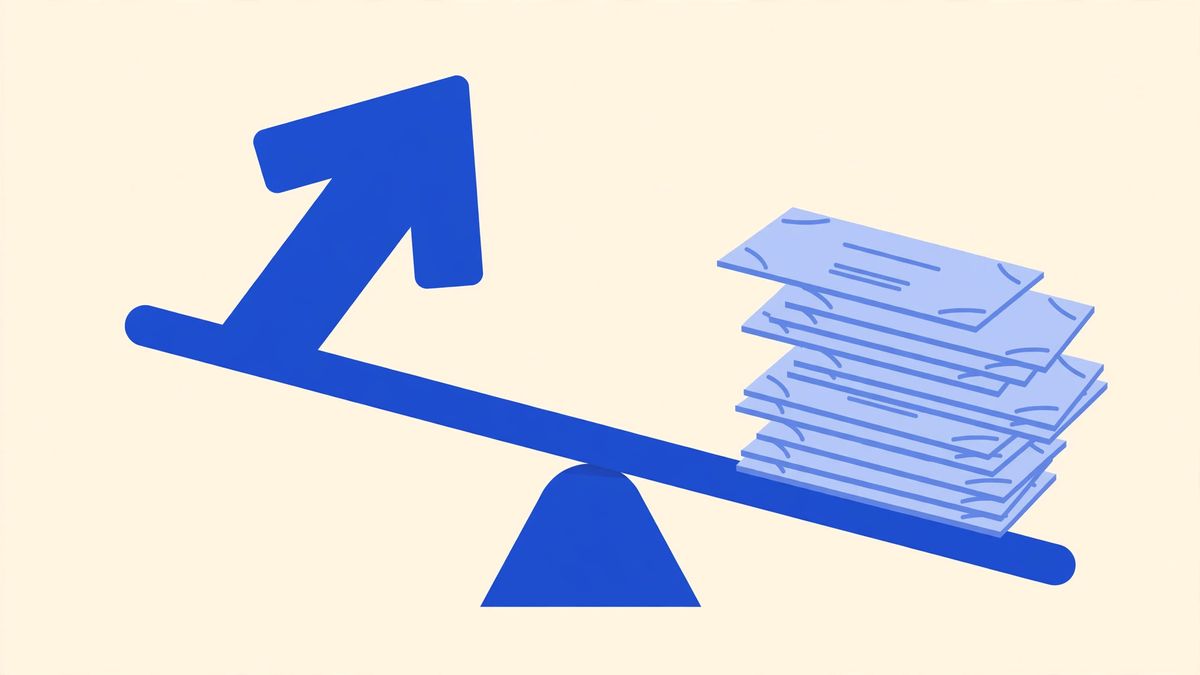
Nothing unsettles a conservative investor quite like watching the "safe" portion of the portfolio lose money. When central banks raise interest rates, bond funds fall — sometimes sharply — and the statements look alarming. Yet the mechanics behind the drop are straightforward, the damage is mathematically bounded, and higher rates are quietly good news for anyone who keeps holding. Here is what is actually happening inside your bond fund when rates climb.
Why bond prices fall when rates rise
A bond is a promise to pay fixed interest. Imagine your fund holds a bond paying 3% a year. If new bonds are suddenly issued paying 5%, nobody will pay full price for your old 3% bond — its price must drop until its effective yield matches what new buyers can get elsewhere. This seesaw is the single most important fact about bonds: prices and yields always move in opposite directions.
A bond fund is just a basket of hundreds of these promises, so the same logic applies to the fund's net asset value. When rates rise across the board, the market value of every existing bond in the basket gets marked down. The fund has not lost the bonds themselves — the interest payments keep arriving on schedule — but the quoted price reflects what those payments are worth in a higher-rate world.
Duration: your damage estimator
Duration measures how sensitive a bond fund is to rate changes, expressed in years. As a rough rule of thumb, a fund with a duration of 6 will lose about 6% of its value for every one-percentage-point rise in rates (and gain about 6% if rates fall by the same amount). Duration is printed on every bond fund's fact sheet, and it is the fastest way to compare interest-rate risk between two funds.
Duration also doubles as a recovery clock. That same duration-6 fund, after a 1% rate shock, earns its higher new yield — and the extra income gradually repairs the price damage. As a rule of thumb, holding the fund for at least its duration gives the higher reinvested yields time to offset the initial price drop. This is why matching duration to your time horizon matters so much: money you need next year should not sit in a fund with a duration of seven.
Why short-term bonds behave differently
Short-term bond funds, with durations of one to three years, barely flinch when rates rise — a 1% rate increase might shave only 1 to 2% off their price. Their bonds mature quickly, and the fund constantly reinvests the proceeds at the new, higher rates. Long-term funds, with durations of ten years or more, swing much harder in both directions. Neither is "better" in the abstract; they are different tools. Short duration means stability and faster adaptation to new rates. Longer duration means more yield in calm times and bigger price swings when rates move.
Yield versus total return — and the silver lining
Here is the part rising-rate headlines usually skip: the price drop and the higher yield are two sides of the same coin. After rates rise, your fund's yield — the income it throws off — is higher than before. Every interest payment and every maturing bond gets reinvested at the new, richer rates. For an investor who keeps contributing and reinvesting dividends, rising rates accelerate the compounding of income over time. The short-term statement looks worse; the long-term income stream looks better.
Total return is what matters: price change plus income received. In the year rates jump, total return is often negative because the price drop dominates. But in the years that follow, the elevated yield does its quiet work. Investors who sold at the bottom locked in the price damage and forfeited the recovery income — the worst of both worlds.
What to actually do
Match duration to your horizon. Money needed within a couple of years belongs in short-duration funds or cash equivalents. Money earmarked for a decade away can ride out duration risk.
Keep reinvesting. Automatic dividend reinvestment buys more shares at lower prices during the dip — the bond-fund version of buying the sale.
Do not reach for yield blindly. When safe yields look thin, the temptation is to chase high-yield "junk" bonds, which behave more like stocks in a crisis — exactly when you wanted stability. Extra yield always comes with extra risk attached.
Remember what the fund is for. Most investors hold bonds to dampen portfolio volatility and fund near-term spending, not to shoot the lights out. Judge the fund against that job, not against stock returns.
Bond funds versus individual bonds
A common question in rough years: would I be better off holding individual bonds to maturity? An individual bond does return its face value at maturity regardless of the price swings in between — comforting, but it requires building a diversified ladder yourself and tying up capital in each rung. A fund gives you instant diversification and professional management of maturities, at the cost of never having a single maturity date. For most investors, the fund's simplicity wins; the "hold to maturity" comfort of individual bonds is real but narrower than it appears, since a fund held for its duration achieves a similar recovery on its own.
Rising rates feel like punishment, but they are better understood as a repricing. The income your bond fund generates is now higher than it was — and income, over time, is what bond investing was always about.